
🏭 Introduction: The importance of correct installation
The installation of a banana chips It is a fundamental step to guarantee efficient production, safe and durable. Although many people think that it is enough to connect the machine and start producing, The reality is that professional assembly makes the difference between a stable production line and one full of technical failures..
In this we will explain how to properly install a banana chip making machine, what tools do you need, what mistakes you should avoid, and how to optimize your work environment for industrial-grade chips from day one.
If you are considering investing in this type of equipment, this guide will be your complete reference.
🔧 1. Installation Site Preparation
Before unpacking the machine, It is essential to prepare the area where it will be installed. A banana chips production line need space, ventilation and adequate hygiene and electrical conditions.
a) Space and distribution
- The area must be flat, level and easy access for operators.
- A free space of at least 1 meter around of each component (hairy, cutter, fryer, dehydrator, baler).
- The height of the ceiling must allow air circulation and maintenance without difficulty.
- Avoid direct exposure to the sun or rain if it is an open space.
b) Ventilation and temperature
Frying banana chips generates heat and steam, so good ventilation is essential.
- Install air extractors or industrial fans to maintain room temperature.
- Maintain an average temperature between 20–30 °C in the production area.
c) Hygienic conditions
- The floor must be non-slip and easy to clean..
- There should be no cracks or areas where oil or residue accumulates..
- The use of washable walls or stainless steel panels is recommended for greater hygiene.
⚙️ 2. Unpacking and checking components
Once the site is prepared, proceed with unpacking the equipment.
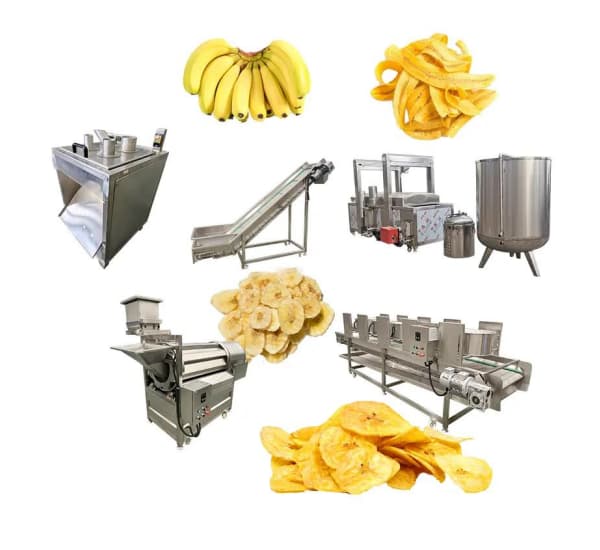
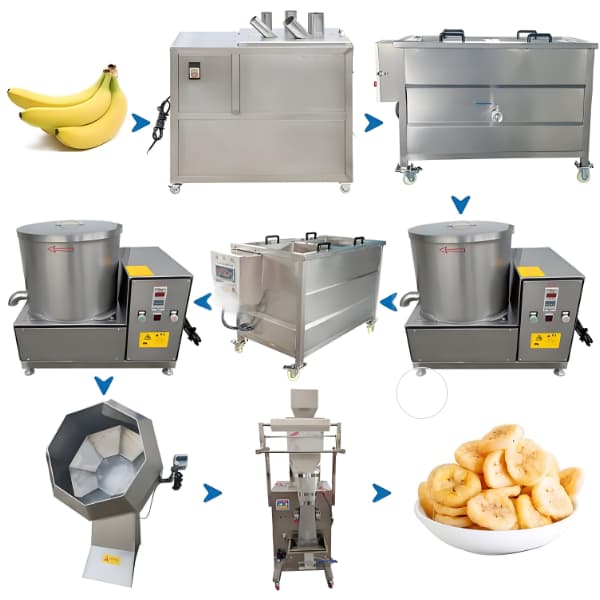
Each banana chips industrial generally includes several modules:
- banana peeler
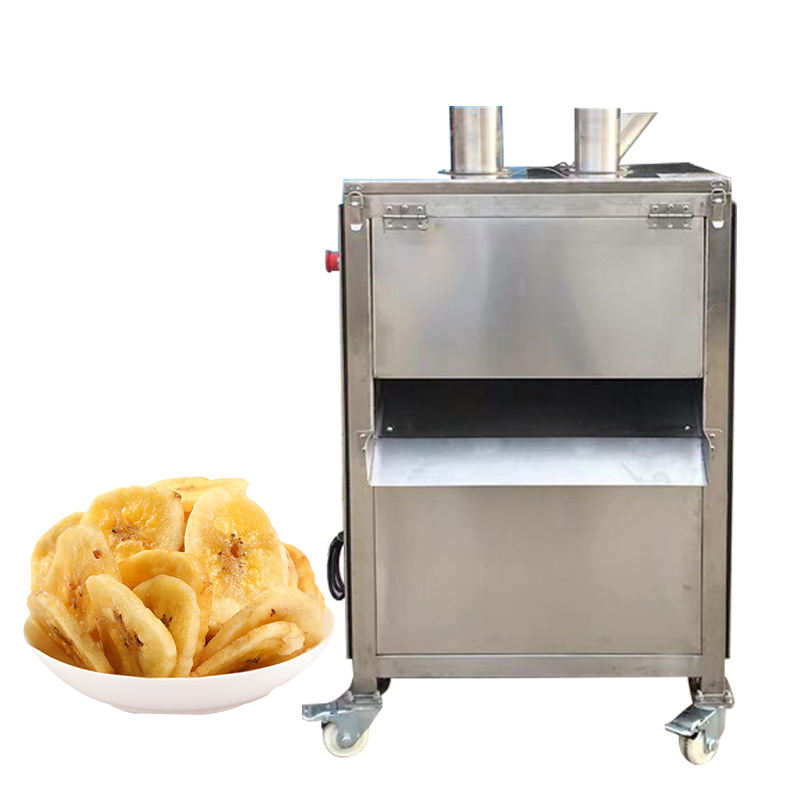
- Cutter or slicer
- Continuous or semi-automatic fryer
- Dehydrator or oil remover
- Cooling system
- Automatic packing
a) Visual inspection
Carefully check that all components are in perfect condition and without damage during transport.. Verify:
- Intact electrical cables
- Screws tight
- Surfaces free of dents and rust
b) Checking parts and manual
Make sure you have:
- Installation manual
- Parts and accessories list
- Basic tools (keys, screwdrivers, insulating tape)
If you detect any missing parts, Immediately contact the manufacturer or supplier before proceeding.
⚡ 3. Electrical and power connections
The electrical system is the heart of a banana chips. An incorrect connection may damage the equipment or cause accidents..
a) Electrical requirements
- Standard voltage: 380In Trifasico / 50Hz (for industrial use)
- In some countries, 220V three-phase is used; consult the technical plate.
- Verify that your plant system is equipped with a differential circuit breaker y grounding.
b) Electrical installation
- Use copper cables of adequate section (minimum 4 mm² for medium equipment).
- Avoid improvised extensions or adapters.
- If you have multiple modules (hairy, fryer, baler), connect each one to a main control panel.
c) Electrical safety
- Install one general emergency switch accessible to operator.
- Check the direction of rotation of the motors before putting them on load.
- Never perform maintenance with the machine connected.
🔩 4. Mechanical connections and equipment alignment
Each module must be connected correctly to ensure continuous product flow.
a) Online positioning
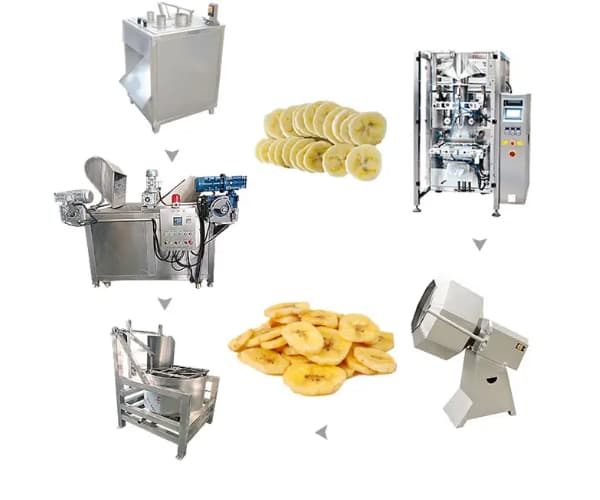
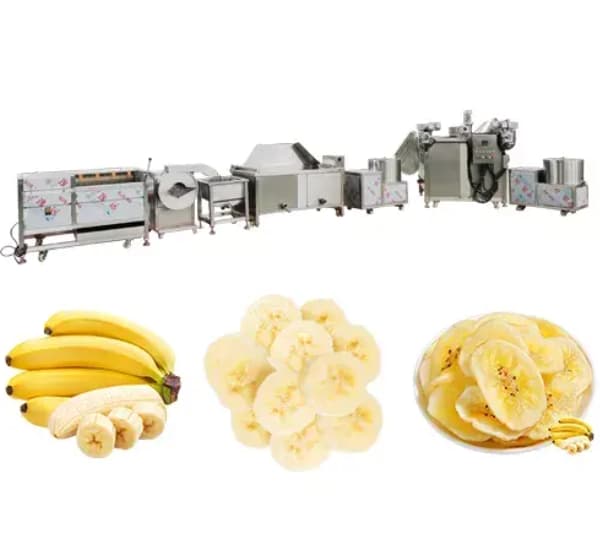
The recommended installation order is:
- Peladora
- Cutter
- Fryer
- Degreaser / dehydrator
- Cooler
- Baler
Place machines on firm, level bases. Use a bubble level to check horizontality.
b) Connections between machines
- Use trays or conveyor belts to move chips between modules.
- Make sure the fryer oil does not splash onto other areas.
- Drain pipes must be connected to a safe disposal system.
🧴 5. Connection of auxiliary systems
a) oil system
The fryer needs an oil filtration and recirculation system:
- Connect the oil pump to the main tank.
- Make sure the oil is flowing properly and there are no leaks.
- Use only refined vegetable oil (sunflower, palm or corn).
b) water system
some parts, like the peeler or slicer, require water:
- Connects a clean water line with quick-closing valves.
- Maintain pressure between 1.5 y 2 bar.
- Install a filter to prevent clogging.
c) Compressed air system (optional)
- Recommended for automatic balers.
- ideal pressure: 0.6–0.8 MPa.
- Check for leaks in hoses or valves.
🧪 6. Initial test run
Before starting official production, make a vacuum test (no bananas) to make sure all systems are working properly.
a) Test steps
- Turn on the main panel.
- Check the direction of rotation of the motors.
- Activate the oil and water pumps.
- Heat the fryer until 160 °C and observe its stability.
- Check sensors and alarms.
b) Test with raw materials
- Cut a small amount of bananas and pass them along the entire line.
- Look at the color, texture and frying time.
- Adjust the temperature and transport speed according to the result.
🧑🔧 7. Final adjustments and calibration
Once the system is stable, make the following settings:
| Component | Parameter | Recommended value |
|---|---|---|
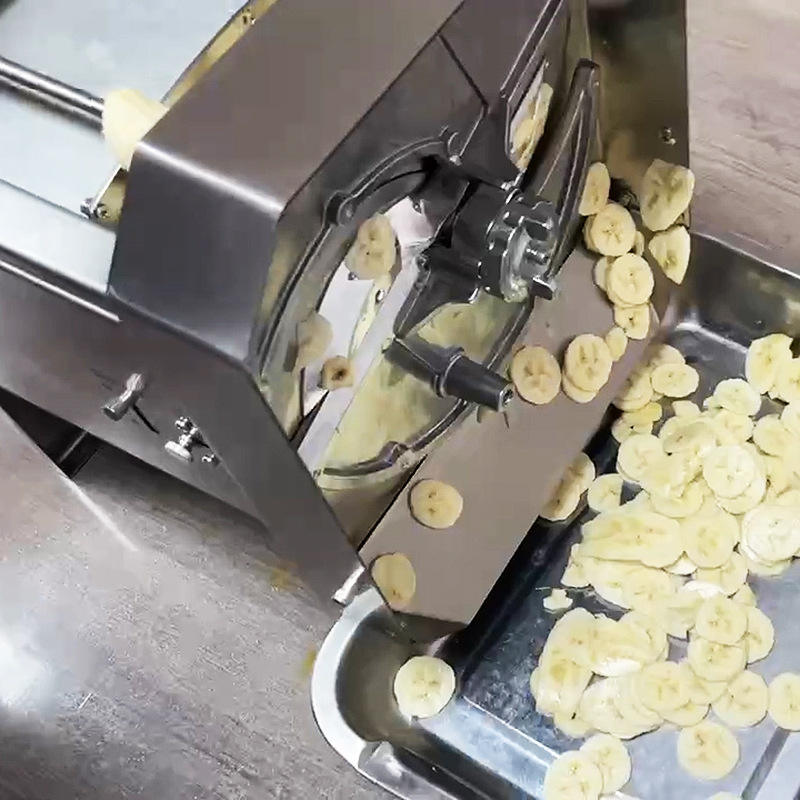
| Cutter | slice thickness | 1.5 – 2.0 mm |
| Fryer | Temperature | 160 – 180 °C |
| Degreaser | Spin time | 20 – 30 s |
| Baler | Weight per bag | 50 – 100 g |
c) Line synchronization
Make sure the speed of the conveyor belt matches the rate of frying and cooling.
A misalignment can result in chips that are too brown or soft..
🧽 8. Cleaning and initial maintenance
After the first production, performs a complete cleaning to remove oil and banana residue.
a) Daily cleaning
- Unplug the machine.
- Completely drain the oil and filter for reuse..
- Wash with hot water and neutral detergent.
- Dry with compressed air or clean cloths.
b) Weekly cleaning
- Check filters and valves.
- Lubricates bearings and motors according to the manual.
- Inspect electrical wiring and air connections.
c) Monthly deep cleaning
- Disassemble key components (cutter, trays, filters).
- Use food-grade degreasing products.
- Disinfect with steam if possible.
🧰 9. Safety in installation and operation
Operate a banana chips involves heat risks, oil and electricity. That is why safety regulations must be followed.:
- Operators must use thermal gloves, cap, apron and non-slip shoes.
- Never approach the fryer when it is on without protection.
- Avoid using water on hot oil.
- Place visible signs in the work area.
- Carry out preventive inspections every week.
🌍 10. Professional installation with DT Food Machine
In DT Food Machine, as leading banana chip making machine manufacturer, We offer comprehensive technical support throughout the installation process:
- Prior advice to prepare the plant.
- Step-by-step assembly guide in digital or video format.
- Online or in-person training for operators.
- Custom adjustment and calibration of the production line.
- After-sales maintenance and supply of original spare parts.
Our goal is that each client can start production without setbacks and with the greatest possible efficiency..
🧾 11. Common errors during installation (and how to avoid them)
| Error | Consequence | Solution |
|---|---|---|
| Not leveling the equipment | Vibration and irregular wear | Use level before assembly |
| Connect wrong voltage | Engine damage | Check technical data before plugging |
| Do not filter the oil | Residue on chips | Install automatic filtration system |
| Lack of ventilation | Overheating | Install industrial extractor |
| Do not drain oil after use | Internal oxidation | Drain and clean after each day |
Avoiding these errors increases the useful life of the equipment and improves the final quality of the product..
🧮 12. Tips to optimize installation and production
- Use bananas of the same size to obtain homogeneous chips.
- Control the frying temperature with a digital thermometer.
- Filter the oil every 3–4 hours of use.
- Install sufficient lighting to facilitate visual control of the color of the chips.
- Automate the packaging process to reduce labor and increase speed.
🏆 banana chip making machine
Install a banana chips it's not complicated, but requires precision, planning and technical knowledge. A professional installation guarantees:
- Greater safety for staff
- Greater equipment durability
- Energy saving
- Banana chips with crunchy texture and perfect golden color
If you are looking to start your snack production or modernize your current line, DT Food Machine can provide you the complete solution: from plant design to installation, commissioning and ongoing technical support.
With our high quality machines and a specialized technical team, you can start producing export-level banana chips in a few days.