
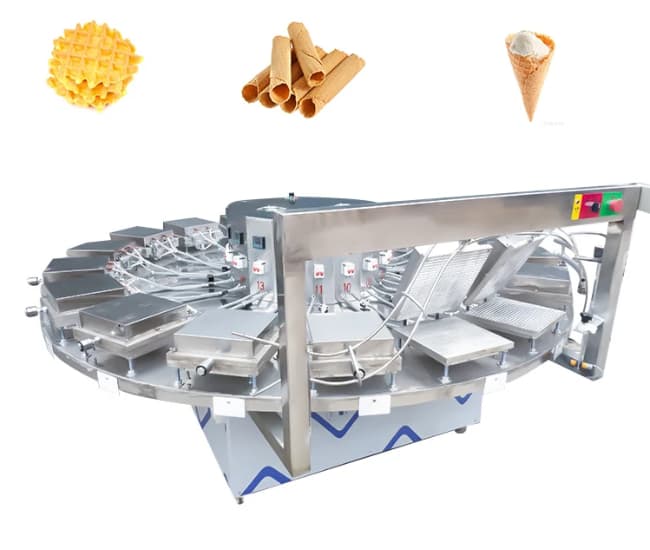
He Ice Cooler It's much more than just an ice cream stand.. It is a perfect combination of texture, flavor, functionality and tradition. In today's world, where consumer experience is key, The ice cream cone has become a symbol of both enjoyment and industrial innovation. created by a leading manufacturer in wafer making machines, gives you an in-depth look at everything related to cones: history, classification, production process, automatic machinery, business advantages, trends and how to start a profitable business in this sector.
Chapter 1: History of the ice cream cone
1.1 Ancestral origins
Although the modern cone was born in the 20th century, Its roots date back to medieval recipes for thin wafers used to hold desserts.. In Europe, especially in Italy and France, Rolled sweet wafers have been made for centuries.
1.2 Birth of the modern cone (1904)
During the World's Fair in St. Louis in 1904, Ernest Hamwi, a Syrian wafer seller, improvised an ice cream stand by rolling up a hot wafer when an ice cream vendor ran out of plates. This is how the first edible cone recognized by modern history was born..
1.3 Industrial evolution of the cone
Shortly after, Machines to form cones automatically began to be patented, thus allowing the commercial expansion of cone ice cream on a large scale.
Chapter 2: Types of ice cream cones
2.1 sugar cone
- golden color, crunchy, sweet taste
- Ideal for handmade ice cream shops
2.2 waffle cone
- Made with thicker dough, grid pattern
- Very resistant for large ice creams or multiple scoops
2.3 flat cone (cup cone)
- Flat base for easy placement on surfaces
- Commonly used by children or for soft serve ice cream
2.4 dipped cone
- covered with chocolate, coco o toppings
- Greater added value and visual appeal
2.5 Custom cones
- Custom colors, printed logos, unique shapes
- Require specialized machinery for customized production
Chapter 3: Ingredients and formulation
3.1 Main ingredients
- wheat flour, sugar, eggs, vegetable fats, sal, natural aromas
- Optional: cacao, Honey, cinnamon, vegetable dyes
3.2 Alternatives for special markets
- Gluten free cones, sugar free or vegan
- Use of rice flour, corn or oats
Chapter 4: industrial production process
4.1 Mass preparation
- Homogeneous mixed
- Viscosity and temperature control
4.2 Automatic cooking
- Rotating plates or cooking tunnels
- Digital temperature and time setting
4.3 Cone formation
- Mechanical rollers form conical shape while the wafer is still hot
- Configurable sizes depending on the mold
4.4 Cooling and stacking
- Transport on ventilated belt to avoid humidity
- Automatic stacking for packaging
4.5 Packaging and conservation
- Airtight packaging or in boxes for greater volume
- Humidity control to avoid softening
Chapter 5: Ice cream cone making machinery
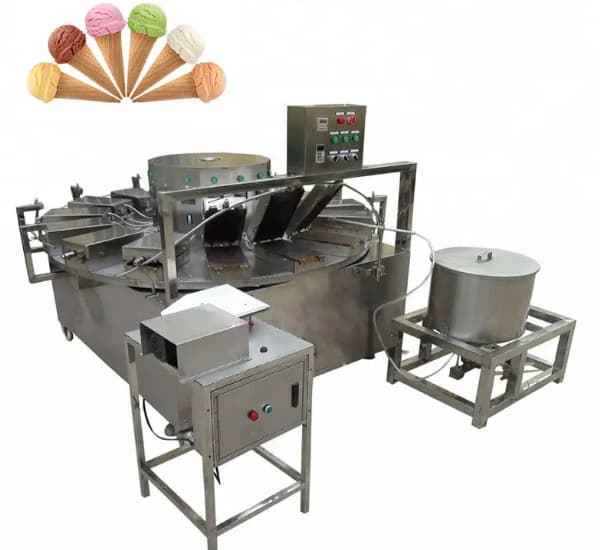
5.1 Automatic cone line
- Dough feeding, cooking, Rolled, court, stacked and packed
5.2 Types of machines we offer
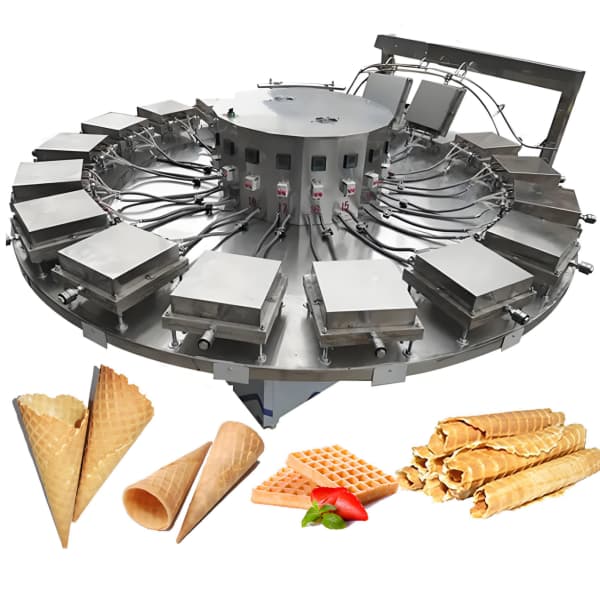
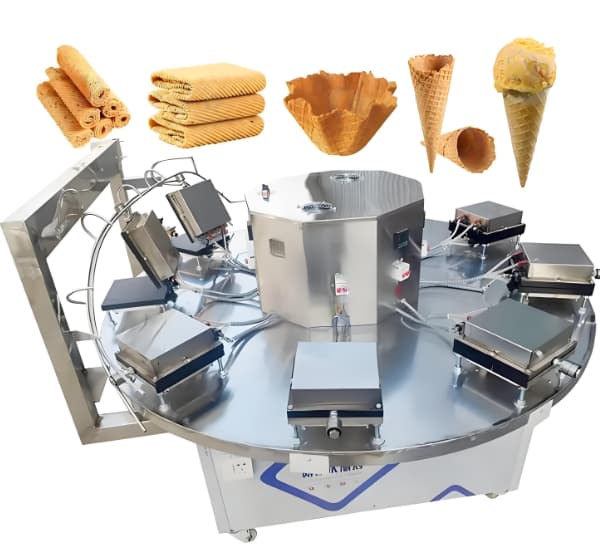
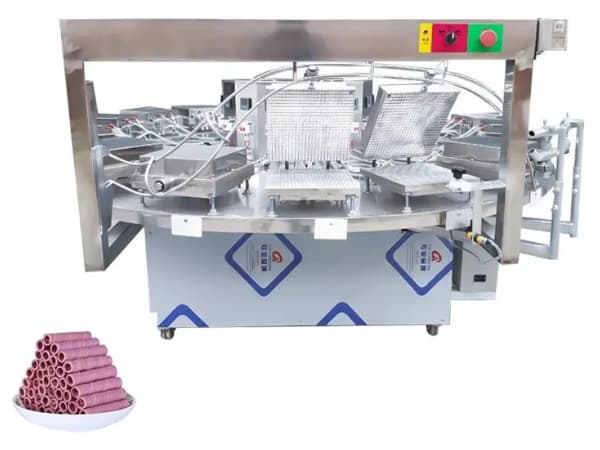
- Automatic rotary cone machine
- Continuous tunnel line for large volume cones
- flat cone machine type “cup cone”
5.3 Advantages of our machines
- Stainless steel manufacturing
- PLC control system
- High performance and low energy consumption
5.4 Technical parameters
| Model | Ability (cones/h) | Power | Dimensions | Weight |
|---|---|---|---|---|
| DT-20 | 3,000 | 12 kW | 2.5×1.2×1.5m | 600kg |
| DT-40 | 6,000 | 20 kW | 3.0×1.5×1.7m | 850kg |
| DT-60 | 10,000 | 28 kW | 4.2×1.8×1.9m | 1200kg |
Chapter 6: Why choose ice cream cones for your business?
6.1 Profitability
- Low production cost
- High perception of value
- Easy scalability
6.2 Sustainability
- 100% edible and biodegradable
- Eco-friendly alternative to plastic
6.3 Product differentiation
- Complete sensory experience
- Gourmet themed cones
Chapter 7: Global Ice Cream Cone Market Trends
7.1 Growth of the artisanal ice cream industry
- Demand for natural and fresh ingredients
- Handcrafted cones as part of the visual appeal
7.2 Product customization
- Cones with brand logos, unique colors or flavors
7.3 International trade
- Export to the Middle East, Latin America, Southeast Asia
- Health regulations and required certifications
Chapter 8: How to choose a suitable cone machine?
8.1 Factors to consider
- Daily production volume
- Available space
- Desired cone type (classic, waffle, plano)
- Voltage and safety requirements
8.2 Recommendation according to type of business
- Local ice cream shop: DTC-20 o DTC-40
- Industrial factory: DTC-60 or multiple lines
8.3 Advantages of our company
- More than 15 years in machinery manufacturing
- Clients in more than 50 countries
- Technical support, spare parts and training
Chapter 9: Real ice cream cone success stories
9.1 Client in Mexico
- Daily production: 30,000 cones
- Reduction of cost per unit by 40%
9.2 Client in Spain
- Direct sales to supermarkets
- Exclusive vegan cone creation
9.3 Client in Arab Emirates
- Export of chocolate dipped cones to Europe
Chapter 10: How to start a cone business?
10.1 Market study
- Identify local demand
- Analyze competition and prices
10.2 Investment plan
- Machinery, installation, inputs, marketing
10.3 Legal and health requirements
- Licenses, food regulations and labeling
10.4 Effective Marketing
- Packaging atractivo
- Online store, social networks, gastronomic fairs
The ice cream cone has come a long way, From a simple improvised idea to a multi-million dollar industry. With innovation, suitable machinery and commercial strategy, Your business can benefit greatly from this product.. In our company, we offer technical solutions, professional advice and advanced equipment you need to transform ice cream cones into a true business opportunity.
Are you interested in starting or expanding your ice cream cone production??
Contact us today to receive a custom quote, a free advice or one virtual demonstration of our automatic cone making machines.
DT Food Machine Co., Ltd. – Leading manufacturer of automatic ice cream cone machines. We export quality, innovation and flavor.