
Types of ice cream cone machine heating: Electric and Gas
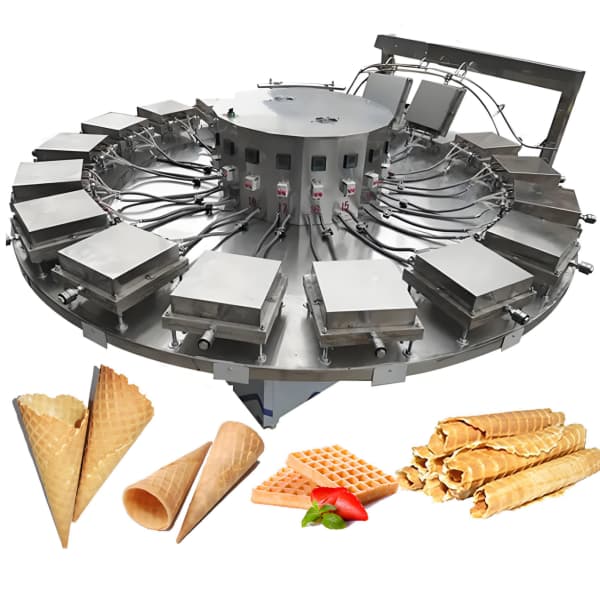
🔧 1. Ice Cream Cones Preparations before operating
✅ 1.1 Machine installation
- Locate the machine in a flat and stable surface.
- Make sure there is good ventilation in case of gas use.
- Verify that all screws are tight.
🔌 1.2 Necessary connections
For electric heating:
- Connect to a three-phase outlet 380V/50Hz or according to the model.
- Verify that the electrical resistance is working correctly.
For gas heating:
- Connect to a power source liquified gas or natural gas (depending on the model).
- Check that no leaks with soapy water.
🍦 2. Step by Step Operation Guide Ice Cream Cone Machine
🥄 2.1 MIX PREPARATION
- Prepare the wafer mixture according to your recipe.
- Make sure it is not too liquid or thick..
🔥 2.2 Heating
- Turn on the heating system and adjust the temperature to 180-220°C.
- Wait for 8 a 12 minutes until the mold reaches the ideal temperature.
🛠 2.3 Operation
- Open the mold.
- Pour the appropriate amount of mixture into the lower mold.
- Close the mold firmly to press and form the wafer.
- wait between 60 y 90 seconds, depending on the desired level of browning.
- Open and remove the wafer formed (with thermal tongs).
- Roll the cone with the automatic or manual roller, if not rotary type.
🔁 2.4 Continuous cycle
- Repeat the pouring process, pressing and extraction.
- Recommended: work in batches 12 a 30 minutes and then pause briefly.
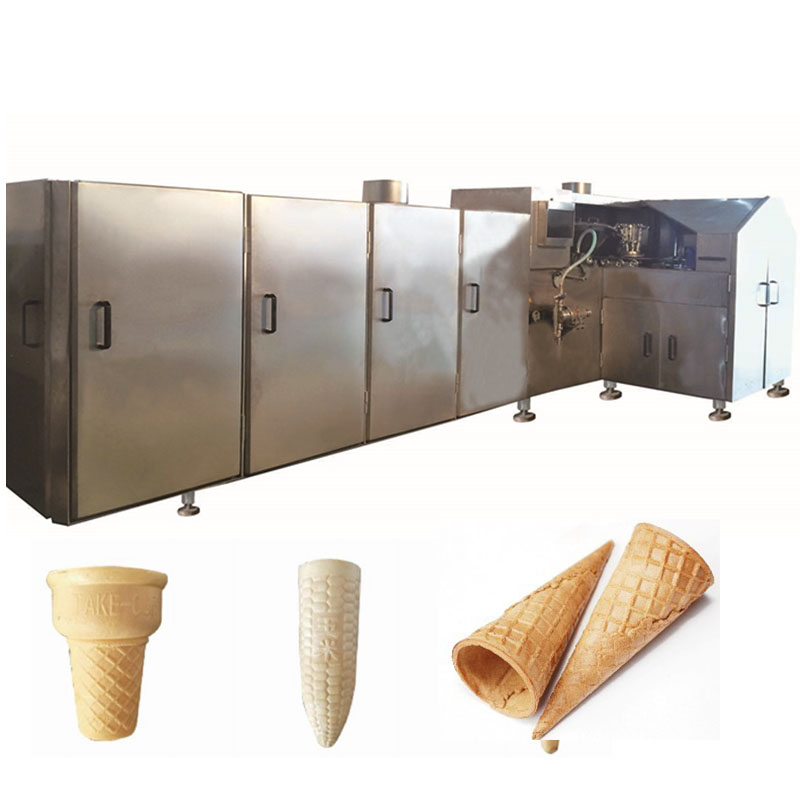
🧼 3. Daily cleaning and maintenance Ice Cream Cones
🧽 3.1 Cleaning after use
- Turn off the machine and disconnect from power or gas.
- Wait for the temperature to drop below 60°C.
- Clean the mold with a soft, damp cloth.
- Do not use metal objects to scrape residue (avoids scratching the Teflon or molding).
🧴 3.2 Weekly cleaning
- Dismantle molds (yes they are removable).
- Clean with neutral solution (pH 7) and rinse with hot water.
- Lubricate the opening/closing axes with food oil.
🛡 4. Preventive Maintenance (monthly)
| Part | Recommended action |
|---|---|
| Electrical resistors | Check continuity with multimeter |
| gas valve | Check for leaks and clean |
| Pneumatic system (and apply) | Check pressure and filter cleanliness |
| Mold | Check wear or deformation |
| Hinges and screws | Adjust or replace if necessary |
⚠️ 5. Common Problem Solving Ice Cream Cones
| Problem | Possible cause | Solution |
|---|---|---|
| The wafer sticks to the mold | Low temperature or incorrect mixture | Raise temperature / adjust recipe |
| Color irregular | Uneven heat distribution | Check resistances / llama |
| Deformed cones | Insufficient cooking time | Increase cooking seconds |
| The machine does not turn on | Electrical failure or gas connection | Check source / fuses |
| gas leaks | Loose coupling or broken valve | To switch off, check connections |
📊 6. Reference technical parameters Ice Cream Cones
| Model | Number of molds | Heating | Capacity/h | Power (electric) | gas consumption |
|---|---|---|---|---|---|
| DT-6 | 6 | Electric / Gas | 200~250 | 6.5 kW | 0.8 m³/h |
| DT-9 | 9 | Electric / Gas | 300~400 | 8.5 kW | 1.0 m³/h |
| DT-12 | 12 | Electric / Gas | 400~500 | 10 kW | 1.2 m³/h |
| DT-18 | 18 | Electric / Gas | 600~700 | 15 kW | 1.5 m³/h |
✅ 7. Final Recommendations
- Train personnel before operating the machine.
- Keep a maintenance log every month.
- Use alone food mixes approved to avoid corrosion.
- Keep the environment clean, dry and grease free.
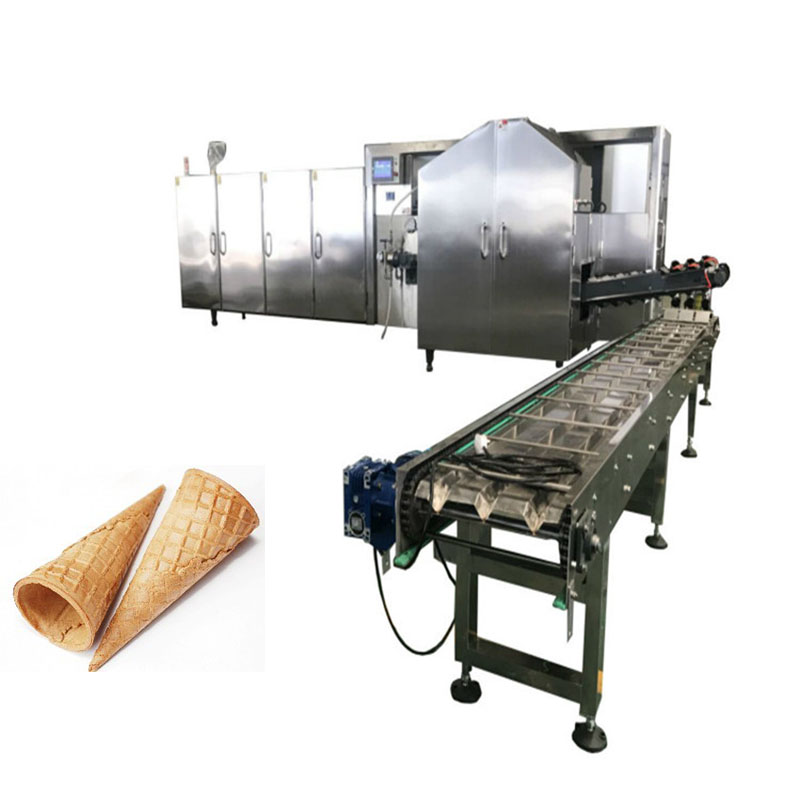
📅 8. Detailed Preventive Maintenance Plan Ice Cream Cones
| Frequency | Task | Technical details |
|---|---|---|
| Diary | Mold surface cleaning | Only with a damp cloth, without corrosive products |
| Check for abnormal noises | Check hinges, closures and valves | |
| Weekly | Deep cleaning of molds | Use soft brush, neutral detergent |
| Closing system review | Grease with food oil | |
| Monthly | Electrical or gas valve inspection | Check connections, leaks or heating failures |
| Adjustment of screws and moving parts | Especially in hinges and mold frames | |
| Quarterly | Electrical or gas safety tests | Measure consumption, leaks, amperage |
| Replacing worn parts | According to mold wear, gaskets or resistances | |
| Annual | General maintenance by professional technician | Internal deep cleaning, full review |
| Component update if applicable | Thermostats, timers or relays |
🛠 Recommendation: carry a physical or digital record with date, tasks performed and signature of the person responsible.
❓ 9. Frequent questions (FAQ about Ice Cream Cone Machine)
🔥 What temperature is ideal to make perfect cones?
It is recommended between 180°C y 220°C depending on the type of mixture. If the cone comes out pale, rise temperature; if it burns, lower it.
🧯 What to do if there is a smell of gas?
Immediately turn off the gas valve, ventilate the area and check with soapy water for leaks. Don't use fire to test. Call a technician if it persists.
⚙️ How much cooking time does each cone need??
Generally between 60 y 90 seconds per cycle. Adjust according to desired color and texture.
🧼 How to clean if the mixture has hardened in the mold?
Wait for it to cool, do not scrape with metal. Use a silicone spatula and apply hot water if necessary.
⚡ Can it operate with an electric generator?
Yeah, but it must guarantee a stable power output according to the model(e.g.. 10~15kW for models 12-18 molds),preferably three-phase generator.
🔁 Can I change the size of the mold?
In some models modular yes, but technical advice is needed to ensure compatibility.
🧑🔧 Does the machine need a certified technician for installation?
For three-phase gas machines, professional installation recommended for security.