
Wafer making is a traditional activity that today has become a profitable business opportunity.. With the support of a Wafer making machine, it is possible to improve efficiency and ensure constant production. These crunchy products are widely used in ice cream parlors., cafes and dessert shops. Their sweet flavor and light texture make them very attractive to consumers of all ages..
For those who want to start in this sector or expand their production, a wafer making machine with capacity 100 a 1000 pieces per hour represents a practical solution. This type of equipment offers a balance between investment, size and performance, which makes it a widely used option in small workshops and family businesses.
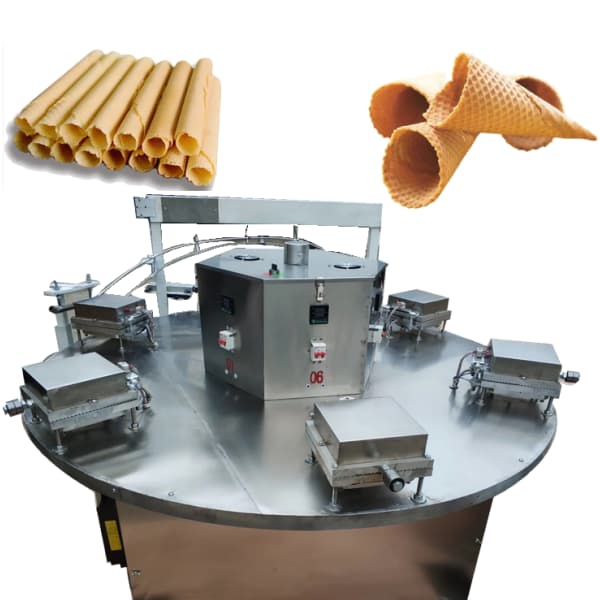
Efficient small-scale production
Machines with capacity 100 a 1000 pieces per hour are designed to meet moderate production needs. They do not require large installations or high investments, which facilitates its adoption by entrepreneurs.
This production range allows us to respond to daily demand without generating excess product.. It is also possible to adjust the work pace depending on the season or sales volume., which brings flexibility to the business.
The compact size of these machines makes it easy to install in small spaces.. Many times they can be located in small industrial kitchens or even in commercial premises..
Basic raw materials for wafers
The quality of the wafer depends largely on the ingredients used. The basic recipe is simple, which keeps production costs low.
Common ingredients:
- wheat flour
- Sugar
- Vegetable oil or butter
- Water or milk
- Essences or flavorings
Some producers also add coloring or special ingredients to differentiate their product in the market.. This allows you to create unique and attractive wafers..
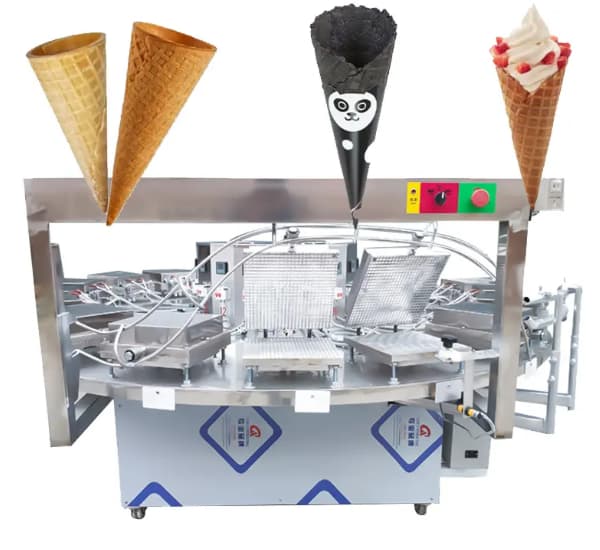
Step by step operation
The production process with a wafer machine is easy to understand and follow.
MIX PREPARATION
The ingredients are mixed until a uniform liquid mass is obtained.. It is important to avoid lumps to achieve an adequate final texture..
Dosage
The machine deposits a precise amount of dough onto the hot plates. This guarantees uniformity in each piece.
Cooking
The plates, that are at high temperature, They cook the dough in just a few seconds. A thin and flexible sheet is formed.
Molding
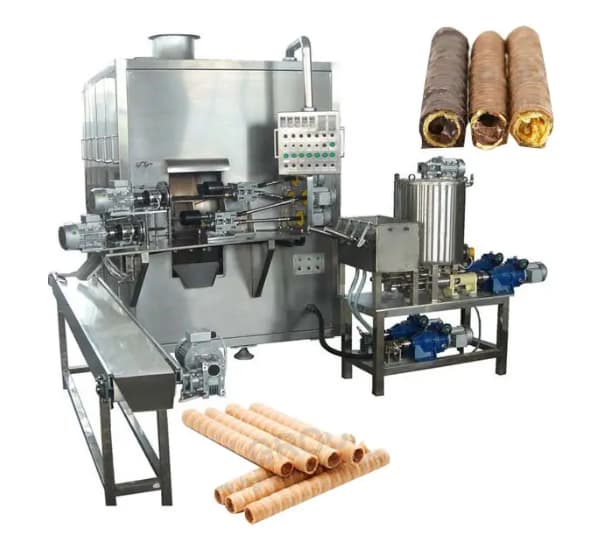
While the sheet is still hot, if it gives it shape. Can be rolled or placed in molds to create different types of wafers.
Cooling
Once formed, the product cools quickly and acquires its crispy texture.
Harvest
The finished wafers are removed and prepared for sale or storage.
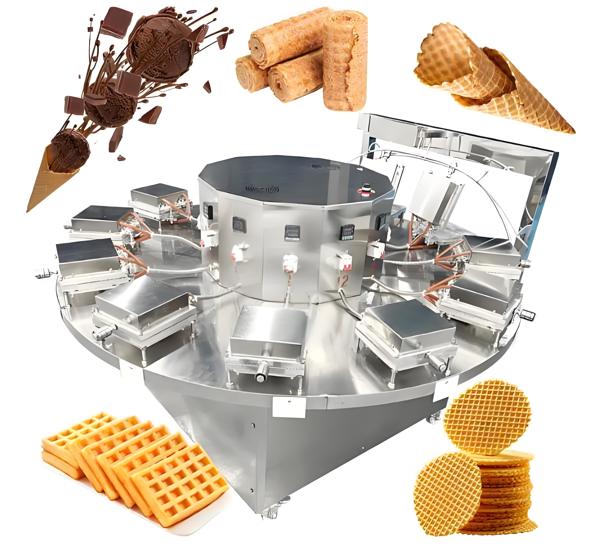
Main components of the equipment
A wafer maker includes several essential parts that work together..
cooking plates
They are metal surfaces that distribute heat evenly. Its quality directly influences the final result.
Heating system
Can run on electricity or gas. Both systems are efficient, although the choice depends on the local energy cost.
Forming molds
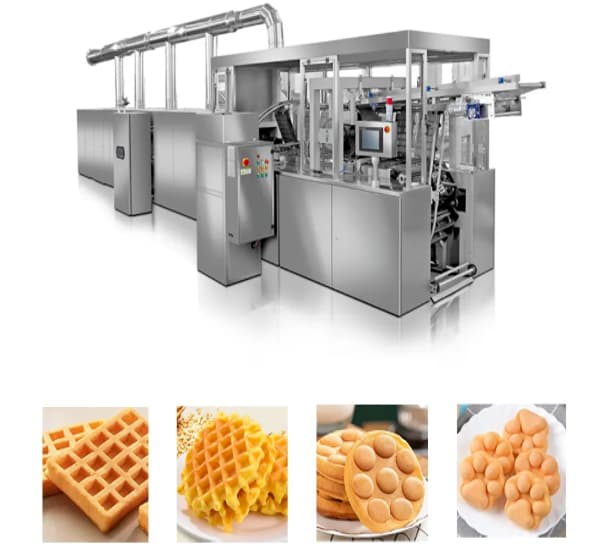
These define the shape of the wafer. They can be changed to produce different styles.
control Panel
Allows you to regulate the temperature and cooking time. Proper control prevents burnt or undercooked products.
Structure
Generally made of stainless steel, which guarantees hygiene and durability.
Types of machines available
In this production range there are several options depending on the level of automation.
Manual equipment
They are simple and economical. They require greater operator participation, but they allow you to start with a minimum investment.
Semi-automatic equipment
They combine automatic processes with manual intervention. They are the most common in small businesses.
Compact automatic equipment
They offer greater comfort and efficiency. Reduce human effort and improve product consistency.
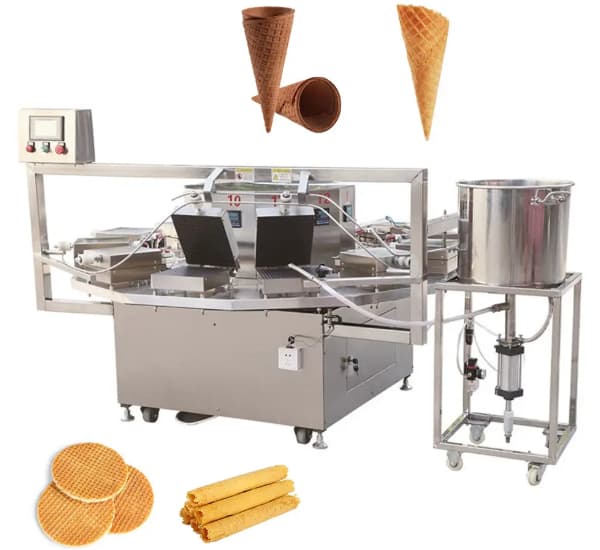
Indicative technical parameters
| Parameter | Valor |
|---|---|
| Ability | 100–1000 pieces/hour |
| Power | 3–10 kW |
| Voltage | 220V / 380V |
| Type of energy | Electric Gas |
| Material | Stainless steel |
| Dimensions | 1–2m long |
| Weight | 200–500 kg |
| Product size | Adjustable |
These values may vary depending on the manufacturer and specific model.
Advantages for small businesses
This type of machine offers multiple benefits that help business growth.
Accessible investment
No need for large capital to start production.
Stable production
Each wafer maintains a similar size and shape, which improves the presentation.
Time savings
Automation reduces manual work time.
Easy operation
The operation of the equipment is simple and does not require advanced technical knowledge.
Adaptability
Allows the production of different types of wafers according to market demand.
Uses and market opportunities
Wafers have a wide application in the food industry.
- Ice cream accompaniment
- Sale in cafes
- Supermarket products
- Packaged sweet snacks
The growth in dessert consumption has boosted the demand for this product. Besides, customization opens new opportunities, like wafers with chocolate, special colors or flavors.
Important factors before buying
Choosing the right machine can make a difference in business profitability.
actual capacity
It is important that production matches expected demand.
Material quality
Stainless steel is preferred for its strength and ease of cleaning..
Energy consumption
An efficient team reduces operating costs.
Technical support
Having after-sales service makes maintenance and repair easier.
Ease of cleaning
Simple design allows high hygiene standards to be maintained.
Maintenance and care
Regular maintenance is key to extending the life of the equipment.
Constant cleaning
Eliminating dough remains after each day avoids hygiene problems.
Plate review
Plates must be kept in good condition to ensure uniform cooking..
Periodic adjustments
Reviewing temperature and operating times improves product quality.
Correct use
Following the manufacturer's instructions avoids unnecessary damage.
Innovation and development in wafers
The current market is looking for different products. Manufacturers can innovate easily.
- Whole wheat wafers
- Sugar-free options
- Custom shapes
- new flavors
The flexibility of these machines allows you to quickly adapt to new trends, which represents an important competitive advantage.