
Content table
- Introduction to the peanut butter market
- What is an industrial peanut butter making machine?
- Advantages of using an industrial peanut butter machine
- Types of peanut butter making machines
- Principle of operation of a colloid mill for peanuts
- Main components of an industrial peanut butter machine
- peanut butter production line: Stages and equipment
- Technical parameters of industrial peanut butter machines
- Applications in the food industry
- Health requirements and quality control
- Maintenance and cleaning of peanut processing machine
- Common problems and solutions in industrial operation
- How to Choose the Best Commercial Peanut Butter Machine
- Costs and profitability in peanut butter production
- Recommended suppliers and manufacturers
- Frequently asked questions (FAQs)
- Success stories in peanut butter factories
- Technological innovations in peanut processing machinery
- How to Start a Profitable Peanut Butter Business
- Conclusion: Investment in an industrial peanut butter machine
1. Introduction to the peanut butter market
Peanut butter has become an essential product in both traditional and emerging markets. Its growing demand drives many entrepreneurs and food factories to invest in efficient and automated production lines. At the heart of this production is the Industrial peanut butter machine, a piece of equipment designed to guarantee uniform texture, authentic flavor and high productivity.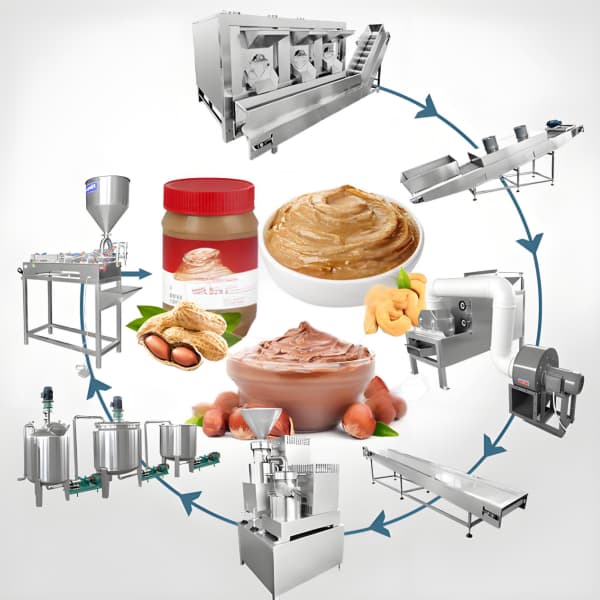
2. What is an industrial peanut butter making machine?
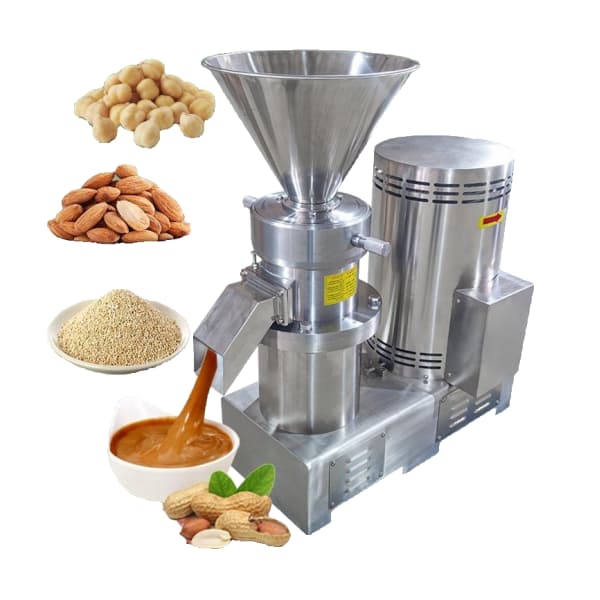
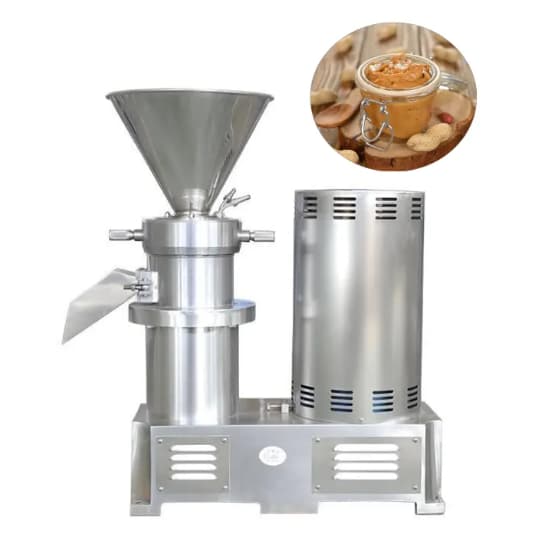
It is a food processing equipment designed to crush roasted peanuts into fine paste or thick cream., commonly known as peanut butter. These machines are made of stainless steel and operate through crushing processes., emulsification and homogenization. They are also known as:
- Peanut Colloidal Mill
- Industrial peanut butter mill
- peanut butter processing machine
3. Advantages of using an industrial peanut butter machine
- ✅ High continuous production capacity
- ✅ Precise control of grind level and texture
- ✅ Hygienic materials (stainless steel 304/316)
- ✅ Compatible with CIP systems (on-site cleaning)
- ✅ Adaptable to different types of nuts and seeds
4. Types of peanut butter making machines
4.1 Molino coloidal vertical
Perfect for medium and large operations.
4.2 Horizontal colloidal mill
Better stability, easy integration into automated production lines.
4.3 Peanut Butter Roller Machine
For butter with a thick texture and style “crunchy”.
4.4 Automatic peanut butter line
Includes: toaster, hairy, crusher, mixing tank, filling and labeling machine.
5. Principle of operation of a colloid mill for peanuts
The colloid mill works by high speed shear:
- The roasted peanuts are introduced through the hopper.
- A rotor and a stator rotate at high speed.
- The peanuts become a stable and homogeneous emulsion.
- A smooth or granulated paste is obtained, depending on setting.
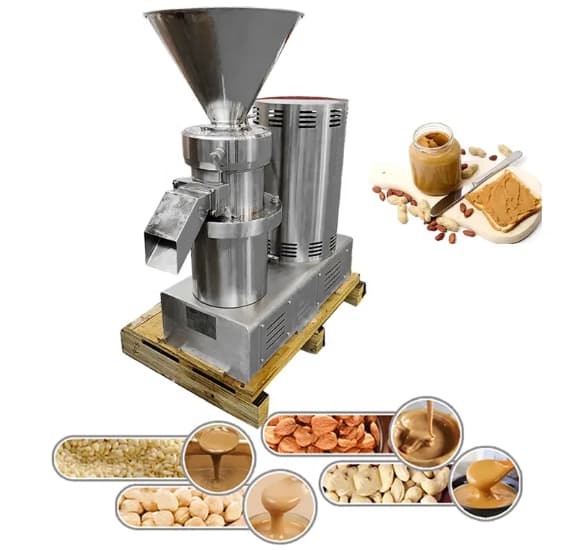
6. Main components of an industrial peanut butter machine
| Component | Function |
|---|---|
| Hopper | Peanut feeding |
| grinding chamber | Crushing and emulsification |
| Motor | Equipment power source |
| control Panel | Speed and temperature settings |
| Salida | Ejection of processed butter |
| Cooling system | Overheat prevention |
7. peanut butter production line: Stages and equipment
- Peanut roast
- Fast cooling
- Dry or wet peeling
- Coarse crushing
- Fine grinding (colloidal machine)
- Mix with salt, sugar or oil
- Aired
- Automatic packaging
- Labeling and storage
8. Technical parameters of industrial peanut butter machines
| Model | Ability (kg/h) | Power (kW) | Finenza (μm) | Weight (kg) | Dimensions (mm) |
| DT-100 | 100 | 4 | 80–100 | 120 | 650×320×650 |
| DT-300 | 300 | 7.5 | 50–100 | 220 | 750×400×900 |
| DT-500 | 500 | 11 | 50–80 | 420 | 900×500×1000 |
| MMP-1000 | 1000 | 15 | 50–80 | 620 | 1200×600×1200 |
9. Applications in the food industry
- Artisanal and industrial peanut butter factories
- Peanut butter processors in Latin America
- Production of healthy snacks
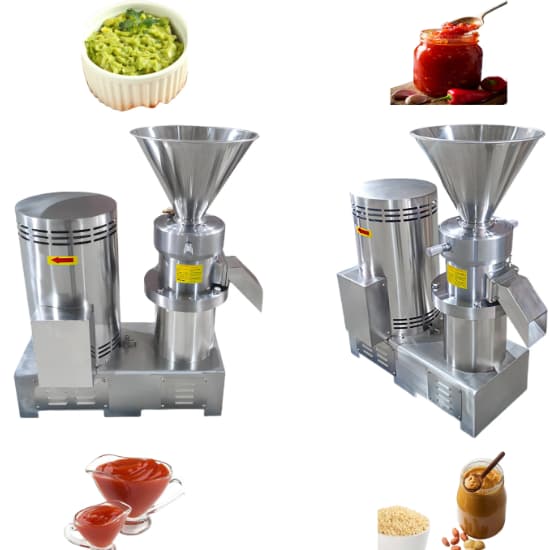
- Almond butter plants, nuez or sesame
- white label companies (private label)
10. Health requirements and quality control
- Compliance with HACCP standards y ISO 22000
- Certified food contact materials
- Equipment compatible with CIP or manual washing
- Recording and monitoring of temperature and viscosity
11. Maintenance and cleaning of peanut processing machine
- Daily cleaning with hot water and alkaline solution
- Weekly inspection of wearing parts
- Monthly lubrication of axles and bearings
- Periodic replacement of the rotor and stator
12. Common problems and solutions in industrial operation
| Problem | common cause | Solution |
| Overheating | Lack of ventilation | Check cooling system |
| Uneven grinding | Stator wear | Change worn parts |
| Leaks at the outlet | Loose or damaged valve | Replace or adjust valve |
| Low production | Obstruction in the hopper | Clean and review entry |
13. How to Choose the Best Commercial Peanut Butter Machine
- Define the desired production capacity
- Choose between individual machine or complete line
- Check electrical compatibility and space
- Compare options with and without automatic function
- Find technical support and warranty
14. Costs and profitability in peanut butter production
| Equipment type | Price range (USD) |
| Small machine for entrepreneurs | $1,500 – $3,000 |
| Industrial middle machine | $4,000 – $8,000 |
| Complete automated line | $20,000 – $80,000+ |
Estimated profitability: 30–60% margin depending on volume and presentation.
15. Recommended suppliers and manufacturers
- DT Food Machine Co., Ltd (recommended)
- GELGOOG Machinery
- Yinda Machinery
- LFM Food Equipment
- Local companies in Mexico, Peru and Colombia
16. Frequently asked questions (FAQs)
Is the machine suitable for other nuts?? Yeah, like almonds, walnuts, sesame, hazelnuts.
Is it easy to clean? Yeah, many include CIP system or removable parts.
What is the useful life of the machine? 10–15 years with regular maintenance.
17. Success stories in peanut butter factories
Case 1: Artisanal factory in Peru With an MMP-300, managed to distribute its brand in local supermarkets in 6 months.
Case 2: Exporting company in Mexico With an automatic line, tripled its production and exports to the US. and Canada.
18. Technological innovations in peanut processing machinery
- Smart motors with IoT monitoring
- Cold grinding systems to preserve nutrients
- Connectable modular equipment
- Use of renewable energy in processing
19. How to Start a Profitable Peanut Butter Business
- Conduct market research
- Choose the right equipment
- Create attractive branding and packaging
- Meet health requirements
- Sell on online channels and local stores
20. Conclusion: Investment in an industrial peanut butter machine
The industrial peanut butter making machine represents a key investment to enter the food sector with a healthy product, profitable and booming. Choosing the right equipment and applying good manufacturing practices ensures short and long term success..