
Cocoa transformation into products like chocolate, butter and cocoa powder requires specialized technology. In this article we will thoroughly explore the operation, types, key benefits and considerations when choosing a cocoa processing machine, covering from handmade equipment to automated industrial plants. Knowing the technical process not only optimizes production, but it can also make a difference in the quality of the final product.
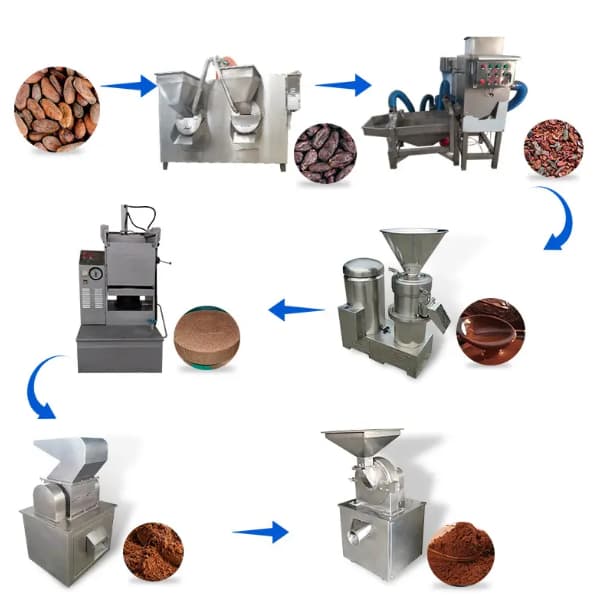
Introduction to cocoa processing machine
Cocoa is one of the most valued crops in the world for its application in the chocolate industry.. To transform it from its natural state to the products we find on the market, multiple processing steps required. throughout history, These stages have evolved from traditional methods to fully automated systems.
Stages of cocoa processing
- Harvest and fermentation: It is carried out in growing areas. Fermentation is essential for the development of grain flavor.
- Drying and storage: Ensures the conservation of the grain and prevents the proliferation of fungi.
- Cleaning and peeling: Impurities are removed and the shell is separated from the grain.
- Toasted: Improves aroma and reduces grain moisture.
- Grinding: The nibs are crushed to obtain cocoa liquor.
- Pressed and refined: The butter is extracted and the texture of the product is refined.
- Shelled and tempered: Final processes to give shine and fluidity to the chocolate.
Each of these phases impacts the flavor, texture and quality of the final product.
Types of machines to process cocoa according to the stage
Each phase of the process needs specific equipment that guarantees efficiency, food quality and safety. The appropriate choice of these machines defines the profitability and standardization of the product.
Cocoa pulping machine
These machines are used in the initial stages to separate the pulp from the grain. They are common in cultivation areas and cooperatives.
Advantages:
- High processing capacity (until 2.400 mazorcas/h)
- Robust and resistant construction
- Reduction of operating times and waste
Some modern versions include electric motors and automatic speed control.
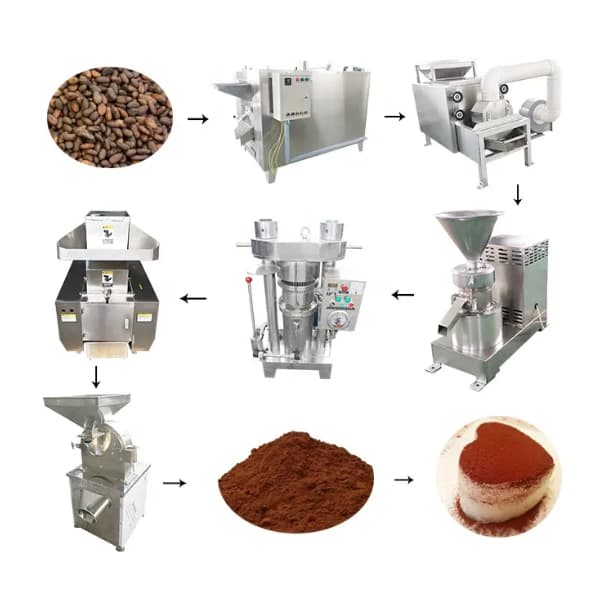
Cocoa processing machine
Responsible for highlighting the aromas and flavors of the grain through precise control of temperature and time. There are models with programmable toasting profiles, which allows specific formulas to be repeated according to the desired flavor profile.
Most common types:
- Rotary toasters
- Drum toasters
- Hot air toasters
Key factors:
- Roasting uniformity
- Energy consumption
- Ease of cleaning
- Load capacity
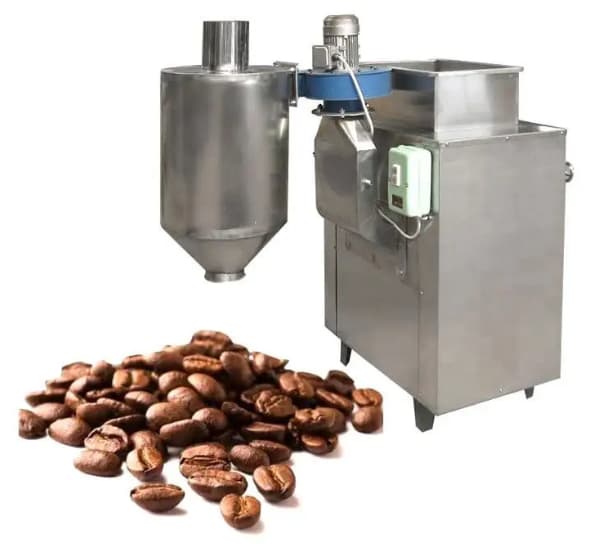
Cocoa peeling machine
Also known as cocoa fan, separates the shell from the roasted grain, leaving only the nib or clean grain. It is essential to avoid impurities in subsequent processes.
Technologies used:
- Pneumatic suction
- Vibration separators
- Cyclonic systems
The new versions allow a dehulling performance of up to 98%, reducing nib loss.
Cacao mill or grinder
Turns nibs into a thick paste known as cocoa liquor, base for chocolates, cocoa butter and powder.
Options:
- roller mill
- stone mill
- Ball mill
- Colloidal mill
Three-roller mills allow you to achieve textures lower than 20 microns, ideal for gourmet chocolate.
cocoa butter pressing machine
Extracts natural fat (cocoa butter) of cocoa liquor by hydraulic or mechanical pressure. This byproduct is essential for both white chocolate and cosmetic products..
Results:
- cocoa butter (for white chocolate and cosmetics)
- cocoa cake (for cocoa powder)
The quality of the pressing determines the proportion of residual fat in the cake.
Cocoa sheller or refiner
Improves texture, flavor and fluidity of chocolate through constant stirring and thermal control. Reduces acidity, volatilizes unwanted compounds and improves unctuousness.
Popular models:
- drum shellers
- Three roller refiners
- Longitudinal shellers
These machines work by cycles 8 a 72 hours depending on the type of chocolate.
Characteristics of a good cocoa processing line
A complete cocoa processing line combines machines from different stages in a continuous and efficient flow. The synergy between these machines optimizes times, reduces costs and ensures constant quality standards.
Automation and equipment integration
- PLC systems for centralized control
- Real-time parameter monitoring
- Alarms and automatic temperature controls
Capacity and scalability
- From small artisanal plants (30-50 kg/h)
- To industrial plants (1-5 tons/h)
- Modular expansion possible
Quality of materials
- Stainless Steel Food Grade
- Easy to clean and disassemble components
- High energy efficiency engines
Benefits of using cocoa processing machinery
The use of a good cocoa processing plant brings operational and commercial benefits:
- Productivity improvement
- Product quality assurance
- Labor savings
- Reduction of losses due to manual handling
- Compliance with international health regulations
- Improvement in product traceability
- Increase in added value for export
Considerations when purchasing a cocoa processing machine
Analysis of required capacity
Choose a machine that adapts to the expected daily production volume. Considers projected growth in the short and medium term.
Available energy source
Some machines operate on gas, others with electricity or even solar energy. The choice influences the operating cost.
Maintenance and spare parts
It is essential to consider ease of maintenance and availability of local spare parts. Some brands offer predictive maintenance using sensors.
Supplier and technical support
Opt for manufacturers with a track record, certifications and after-sales support. The availability of technical training is also an important plus.
Applications of cocoa processing machinery
- Artisanal gourmet chocolate production
- Chocolate powder factories for baking
- Natural cosmetics with cocoa butter
- Export of semi-industrial cocoa paste
- Preparation of cocoa-based drinks
- Community transformation into agricultural cooperatives
Conclusion
The cocoa processing machine It is the heart of any chocolate enterprise. Its correct choice and implementation allows the cocoa fruit to be transformed into products with high added value.. Whether it is a startup or an industrial plant, Investing in appropriate technology is the key to ensuring quality, efficiency and competitiveness in the global chocolate market. With the right knowledge, you can build a profitable operation, sustainable and world class.