
The yogurt, as we know it today, It has a past as old as it is fascinating. It is estimated that he was born more than 4.000 years in the region that currently corresponds to Türkiye, in the Middle East. The term itself yogurt comes from Turkish yogurt, derived from knead, that means knead, a direct reference to the traditional process in which the semi-solid mixture was worked during its production.
However, Its history is not limited only to Turkish territory. Archaeological remains and historical records also link its origin to Asia Central, as well as the old way Thrace —present-day Bulgaria—and Balkan peninsula, where it was already consumed around 4500 a. C.
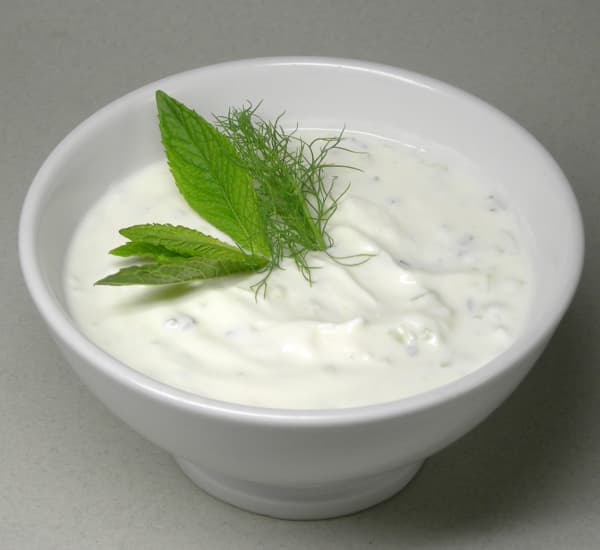
A food even before agriculture
Everything indicates that yogurt existed before humanity fully developed agriculture.. For nomadic cattle-raising peoples, fermented milk was an essential food:
- It was easy to transport
- It kept much better than fresh milk.
- Its slight acidity acted as a natural preservative
- Offered energy and essential nutrients
These conditions made yogurt an indispensable companion on the long journeys of the nomadic peoples of Asia and the Middle East..
Spontaneous fermentation: the accidental origin of yogurt
The most accepted theory states that yogurt was born by accident.
Nomads transported milk in bags made of animal skin.. The ambient heat and the bacteria naturally present in these containers caused a spontaneous fermentation, transforming milk into a thick mixture, slightly acidic and surprisingly long-lasting.
The process began to be replicated easily: You just had to fill the same bag – which contained remains of the previous batch – with fresh milk and wait for the bacteria to do their work..
This ancient method still survives in Turkish domestic tradition: boil milk, add a little yogurt as an initial culture and let it rest at room temperature.
Yogurt in early civilizations
It didn't take long for it to become a revered food..
Even in ancient texts - such as the Old Testament - fermented milks are mentioned, attributing Abraham's longevity to this food “watered by angels”.
Classic authors also celebrated their virtues:
- Pliny the Elder (1st century) He called it a “divine and miraculous food.”.
- Galenio (2nd century), renowned doctor, highlighted its benefits on the stomach and digestion.
Since ancient times, calming properties have been attributed to it, regulators of the intestine and promoters of general well-being.

The leap to modern science: Mechnikov and the revolution of the 20th century
Yogurt went from being a traditional food to becoming a globally popular product only in the 20th century..
The person responsible was the Russian bacteriologist Elie Mechnikov, winner of the Nobel Prize in 1908.
He observed that Balkan peasants—habitual consumers of a fermented milk called yahourth—had surprising longevity.
From there:
- He studied the microorganisms present in yogurt
- It was shown to reduce diarrhea in infants
- Identified vitamins of group B in its composition
- He described it as an “anti-aging” food.
Its scientific support generated a revolution that boosted the demand for yogurt throughout Europe..
From the laboratory to the industry: the birth of modern yogurt
The first industrial production of yogurt came in 1917, when Isaac Carasso started manufacturing it in Barcelona.
The product was initially sold in pharmacies, promoted as a healthy and medicinal food.
years later, in 1942, his son Daniel Carasso brought yogurt to the United States, founding the first company dedicated to producing it in the US market.
During the years 50, yogurt began to be sold in dairies and supermarkets, becoming an everyday food. Its flavor, versatility and benefits catapulted it into homes around the world.
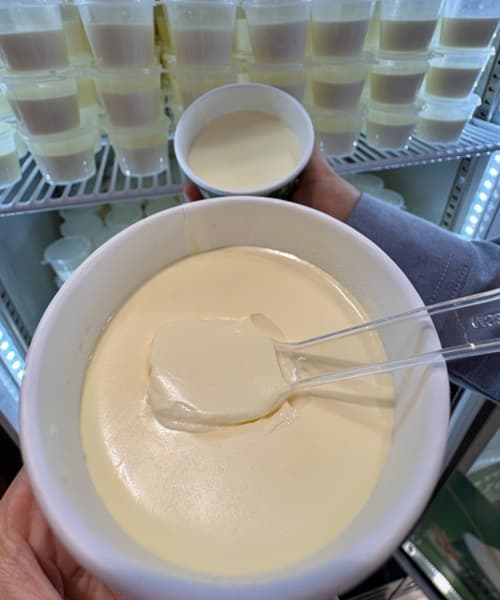
Yogurt today: tradition, science and well-being
What was once an accidental discovery inside a sack of animal skin is now one of the most valued foods on the planet. Consumed by millions every day, yogurt combines:
- Authentic flavor
- Probiotic properties
- Smooth digestion
- High nutrition
- Culinary versatility
And although its modern production uses advanced technology, The fundamental principle remains the same as thousands of years ago:
ferment milk with beneficial bacteria to create a living food, nutritious and full of history.
Now that you know the history of yogurt...
Discover your Artisan Yogurt favorite and enjoy a product that brings together tradition, quality and passion for food.
¡Artisan, passion for food!